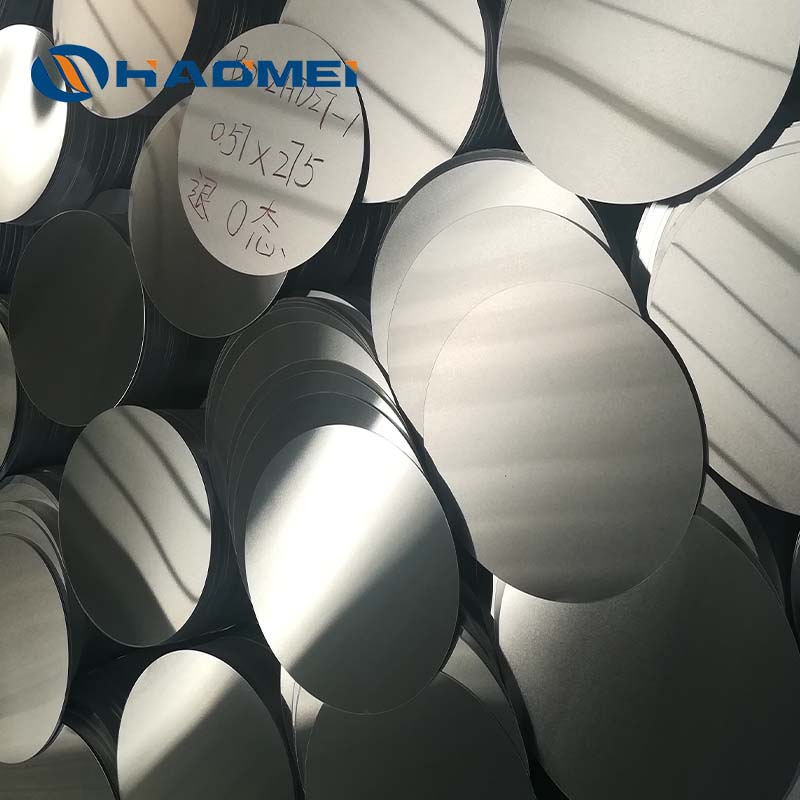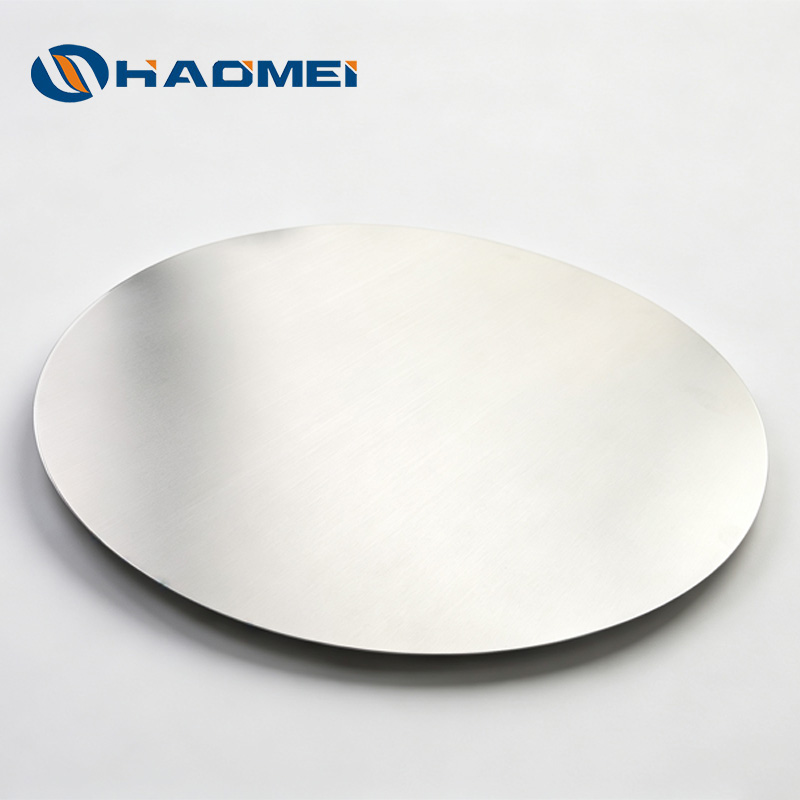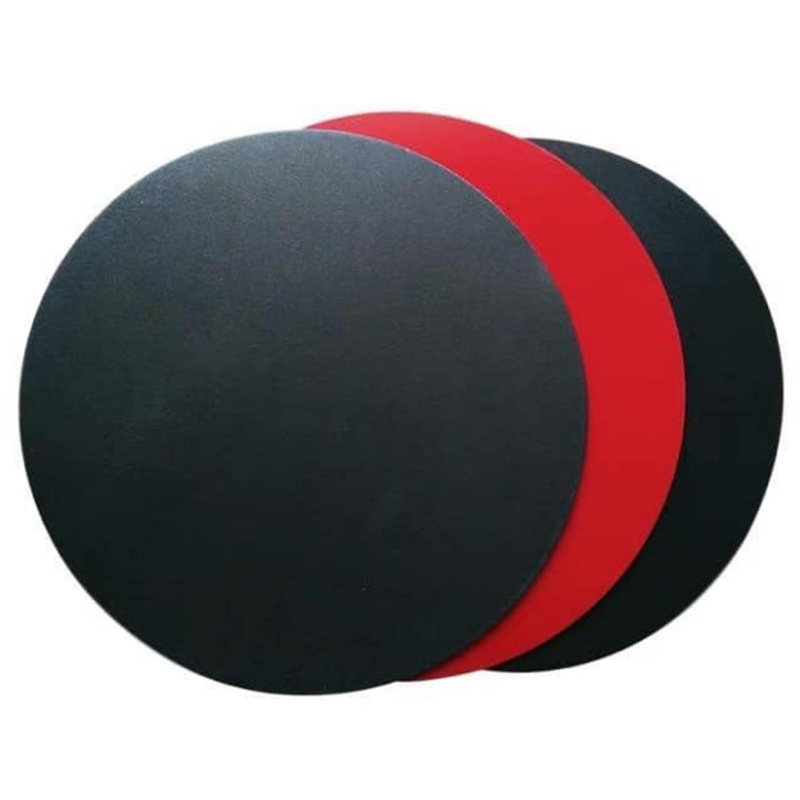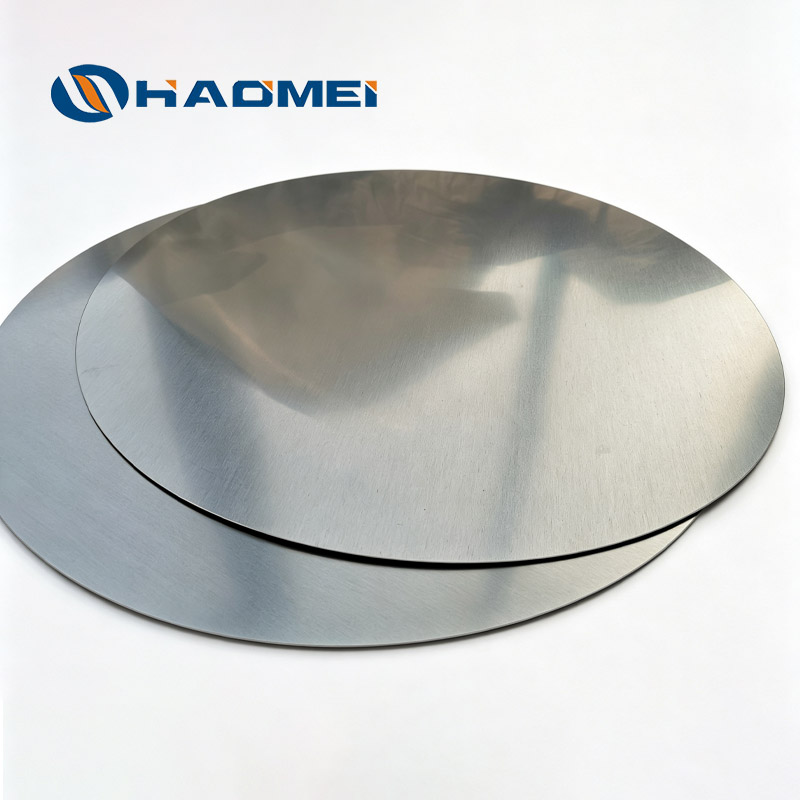


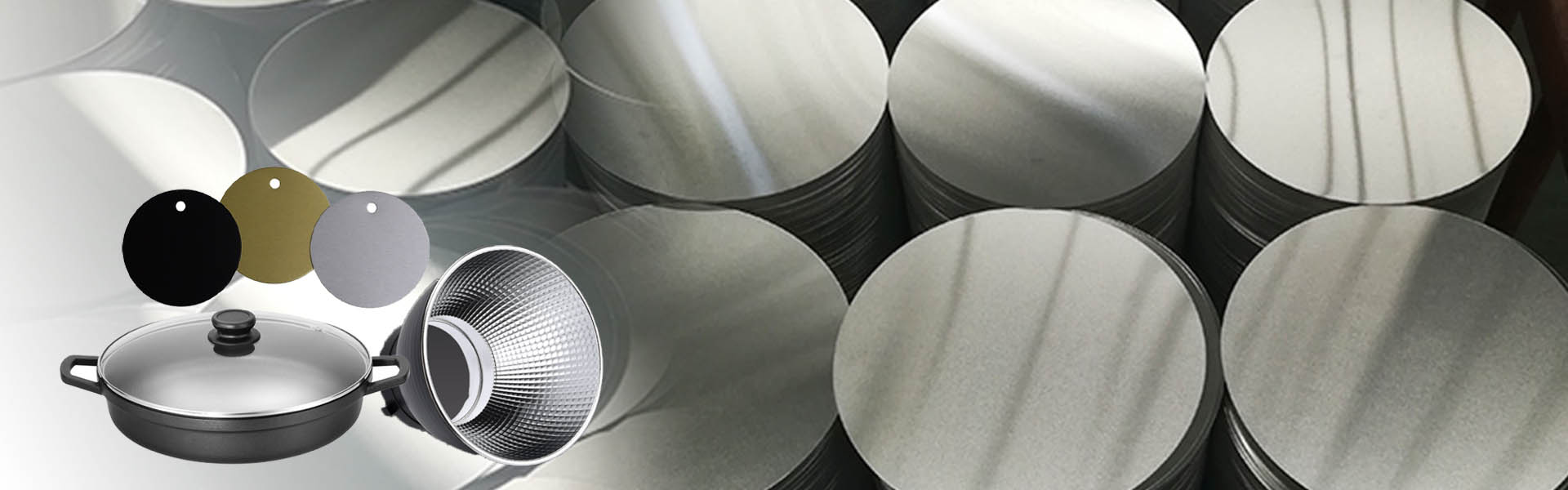
Cookware manufacturers commonly lose yield at the forming stage, not when the round blank is first received. The most costly issue is edge cracking, earing, or wrinkling during deep drawing and spinning. For this reason, the primary specification priority for an aluminium circle for cookware should be stable formability, verified against the actual pan geometry.
A low price per kilogram does not compensate for rejected formed parts, uneven wall thickness, polishing defects, or coating failures. A practical specification must connect alloy chemistry, temper, blank edge condition, surface quality, and forming trials.

Specify Formability Before Diameter and Price
Top concern: crack-free deep drawing. A circular blank must elongate consistently from the rim to the center. During pressing, the rim is pulled inward while the wall stretches. If material ductility is inadequate, or if the cut edge contains burrs and microcracks, fractures often start at the edge.
For drawn pots, kettles, and pressure-cooker bodies, specify the forming route before issuing an order. State whether the circle will be deep drawn, spun, stamped, or used as a base plate. The supplier can then recommend alloy and annealing condition instead of treating all round blanks as interchangeable.
Use this release checklist:
- Confirm final product geometry: diameter, depth, wall profile, flange, handles, and induction base.
- Provide the target drawing ratio and number of draws. A high reduction in one operation requires greater ductility than shallow pressing.
- Require annealed temper, usually O temper, when deep drawing is the main operation.
- Define maximum burr height, edge smoothness, surface protection, and allowable scratches.
- Approve material only after a production-representative forming trial using the intended tooling and lubricant.
Do not accept a generic statement such as "good for deep drawing" as the only quality criterion. It does not define test method, sample frequency, acceptance limits, or what happens if a forming defect occurs.
| Forming risk | Material-related cause | Requirement to place on the order |
|---|---|---|
| Rim cracking | Insufficient elongation, hard temper, rough edge | O temper, deburred edge, agreed tensile and elongation test values |
| Earing | Directional properties from rolling texture | Agree earing evaluation after trial draw and rolling-direction control |
| Wrinkling | Blank too soft for tooling settings or poor lubrication | Match temper to draw depth; confirm press trial parameters |
| Orange peel after forming | Coarse grain structure or excessive deformation | Review grain appearance on formed sample before serial production |
| Uneven coating appearance | Surface marks, residual oil, inconsistent roughness | Set visual standard, cleanliness requirement, and packaging method |
ASTM B209 is a widely used material standard for aluminum and aluminum-alloy plate products. It can provide a baseline for chemical composition and mechanical properties, but a cookware application may require tighter agreement on surface, edge, blanking, and forming performance than a general material standard alone.
Match Alloy and Temper to the Cookware Process
The most common choice is commercially pure aluminum in the 1xxx series or manganese-bearing 3003 alloy. The correct selection depends on required conductivity, depth of draw, strength, final finish, and the construction of the utensil.
| Alloy family | Verified composition characteristic | Typical cookware use | Forming consideration |
|---|---|---|---|
| 1050 | Minimum 99.5% aluminum under Aluminum Association designation rules | Lightweight drawn bodies and general utensils | High conductivity and good ductility when annealed |
| 1060 | Minimum 99.6% aluminum under Aluminum Association designation rules | Spun or drawn cookware requiring high aluminum content | Common for forming; confirm temper and edge condition |
| 1070 | Minimum 99.7% aluminum under Aluminum Association designation rules | Applications prioritizing aluminum purity and conductivity | Softer behavior may require careful handling after forming |
| 3003 | Aluminum alloyed principally with manganese, typically 1.0% to 1.5% Mn | Deeper shapes or products needing more strength | Better strength than 1xxx grades; validate drawability on the actual shape |
For operations combining spinning and deeper wall formation, 3003 Spinning Aluminum Disc Circles can be evaluated where additional strength is needed. For conventional drawn utensils, Aluminum discs in 1050 or 1060 O temper are often assessed first because annealed high-purity grades generally provide strong forming behavior.

Induction-ready cookware requires a separate construction decision. Aluminum is not ferromagnetic, so it does not directly couple effectively with a standard induction field. Manufacturers commonly add a magnetic stainless-steel base or another ferromagnetic layer. Specify the aluminum circle for its forming role and thermal distribution, then evaluate the bonded induction base for flatness, adhesion, and thermal-cycling resistance.
Verify Quality, Traceability, and Food-Contact Readiness
Inspection should begin before the blanks reach the press line. Request a mill test certificate that identifies alloy, temper, heat or batch traceability, thickness, and mechanical-test results. Measure thickness at agreed positions, because thickness variation can alter wall thickness during forming and affect heat distribution.
A practical incoming-inspection plan includes:
- Check diameter, roundness, thickness, and burr direction against the agreed drawing.
- Inspect both faces under consistent lighting for dents, roll marks, oxidation, oil staining, and embedded particles.
- Test a representative sample through the planned draw or spinning sequence.
- Record press settings, lubricant, tool radius, and defect location during the trial.
- Retain approved samples as the visual and forming reference for subsequent deliveries.
Food-contact compliance applies to the finished cooking article, including coatings, decoration, handles, bonded layers, and intended conditions of use. For coated products sold in the United States, FDA regulation 21 CFR 175.300 covers resinous and polymeric coatings used in food-contact applications under stated conditions. In the European Union, Regulation (EC) No 1935/2004 establishes the general framework for materials and articles intended to contact food. These rules do not replace finished-product testing; they establish regulatory requirements that the finished construction must meet.
Ask coating and bonding partners for declarations relevant to the destination market, along with migration-test documentation where applicable. Keep those records connected to the metal batch and finished-product lot number. This documentation is increasingly important for induction constructions and coated cookware, where several material layers contribute to final compliance.
Before production release, approve a signed specification covering alloy, O temper where required, dimensions, edge acceptance, surface standard, packaging, certificate content, trial method, and rejection handling. That process turns a round aluminum blank into a controlled forming input rather than an avoidable source of press-line defects.
Original source: https://www.aluminum-circle.com/a/aluminium-circle-for-cookware.html
Next: Mill Finish Aluminum Circle VS Color-Coated Aluminum Circle: Which Is Better for Cookware
Prev: O Temper Aluminum Circle for Deep Drawing Lamp Shades