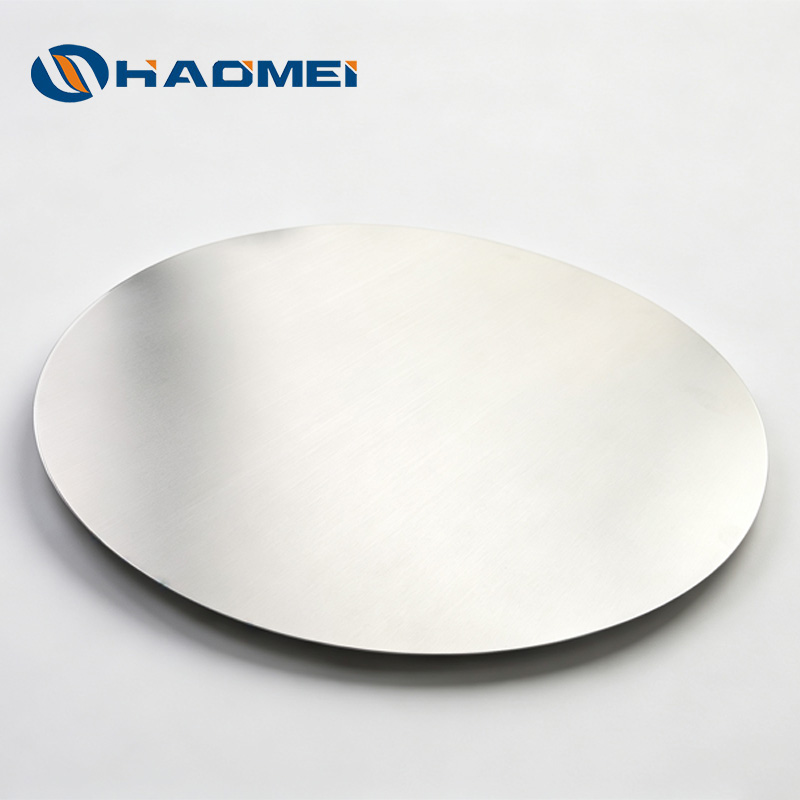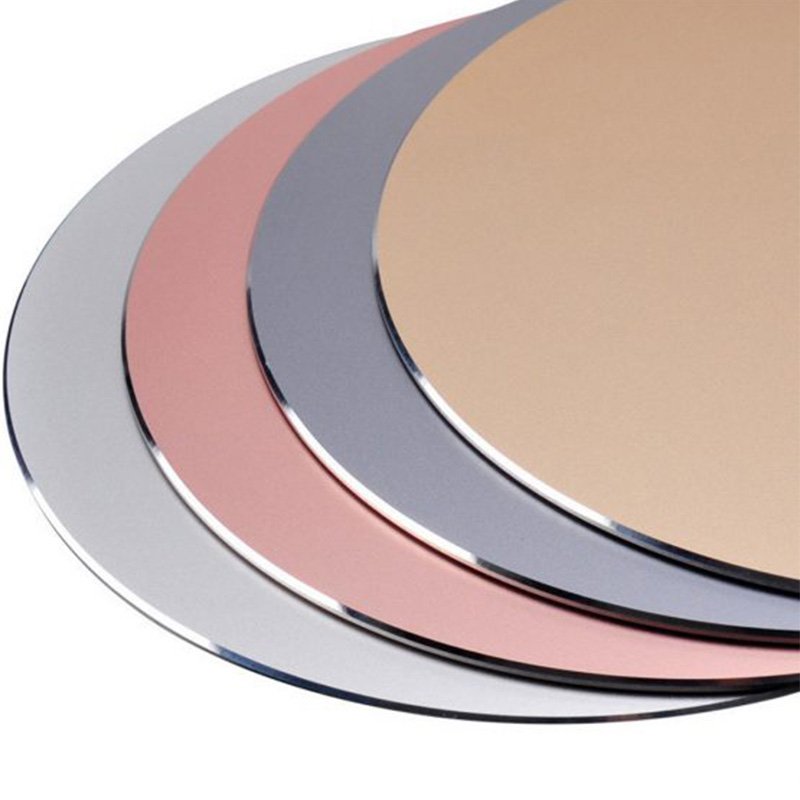


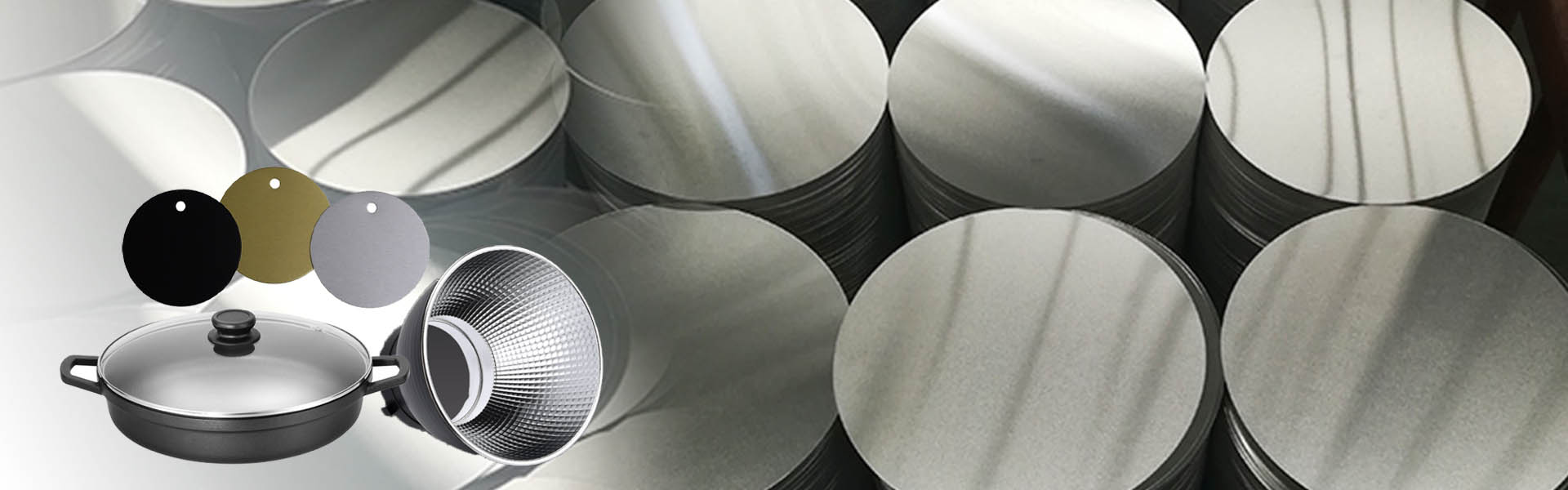
Lightweight has become a core trend in the modern automotive industry. As a fundamental material for automotive components, aluminum discs are widely used in critical areas such as fuel tanks, heat dissipation parts, interior sheet metal, lamp housings, and gaskets.
Unlike general-purpose hardware aluminum discs, the aluminum circle for automotive components must meet higher standards regarding formability, corrosion resistance, strength, toughness, and processing stability.
The materials commonly used on the market for aluminum discs include six alloys: 1050, 1060, 1100, 3003, 5052, and 6061. These alloys differ significantly in performance and are suited to vastly different automotive applications.
I. 1000-Series Pure Aluminum (1050, 1060, 1100)
Alloys 1050, 1060, and 1100 are classified as commercially pure aluminum, with aluminum contents of 99.5%, 99.6%, and 99.0%, respectively. Their shared characteristics include softness, excellent ductility, superior thermal and electrical conductivity, and a high-quality surface finish, alongside good basic oxidation and corrosion resistance.
Specifically, the 1060 aluminum circle offers the highest purity and best formability; it resists cracking during bending and stamping, making it the mainstream choice among 1000-series alloys for disc production. The 1050 alloy performs similarly to the 1060 but has slightly lower purity and offers a better cost-performance ratio. The 1100 alloy contains slightly more impurities, and its surface flatness is not quite as good as that of the other two.
In the automotive sector, 1000-series pure aluminum discs are suitable only for non-load-bearing, lightweight basic components—such as interior decorative gaskets, simple heat shields, and standard lamp housings. They are entirely unsuitable for critical components requiring strength, impact resistance, and high-pressure tolerance (such as fuel tanks, chassis parts, or structural sheet metal), as they are prone to deformation and denting when subjected to the vibrations and pressures of vehicle operation.
II. 3003 Aluminum-Manganese Alloy
3003 aluminum circle is an aluminum-manganese rust-resistant alloy. Compared to 1-series pure aluminum, the addition of manganese significantly enhances overall strength, fatigue resistance, and rust-proofing capabilities. Its strength is approximately 30% higher than that of 1060 aluminum, while it retains excellent stamping and deep-drawing formability; it is resistant to cracking and wrinkling during processing and offers outstanding dimensional stability.
The primary advantages of this material are its balanced performance and exceptional cost-effectiveness. It is resistant to moisture, acids, and alkalis, making it well-suited for the complex operating environments of automobiles. In automotive applications involving aluminum discs, it is primarily used for radiator system components, A/C line gaskets, in-vehicle storage accessories, and general rust-resistant sheet metal parts.
However, 3003 aluminum discs remains a medium-to-low-strength aluminum alloy; it cannot withstand high pressure or intense impacts and is unsuitable for critical load-bearing or pressure-bearing automotive components. Compared to 5-series aluminum, it still lags behind in terms of toughness and ultimate corrosion resistance.
III. 5052 Aluminum-Magnesium Alloy
5052 aluminum circle sheet is an aluminum-magnesium rust-resistant alloy and currently the most widely used and versatile material for automotive aluminum discs. It perfectly meets the requirements of the vast majority of automotive components and is recognized within the industry as the go-to aluminum material for automotive sheet metal and functional parts.
Its core advantages are outstanding: Firstly, it offers a superior combination of strength and toughness—far surpassing 1-series and 3-series alloys—with high resistance to impact and deformation, enabling it to withstand the vibrations and jolts experienced during vehicle operation.
Secondly, it boasts top-tier formability and high elongation, supporting high-speed deep drawing, bending, and stretching across multiple die stages; complex automotive parts can be formed in a single operation without cracking or edge failure.
Thirdly, it exhibits excellent corrosion and rust resistance, withstanding exposure to rain, oil, and road moisture; it resists rusting and degradation over long-term use, making it ideal for harsh conditions such as exterior applications and chassis components.
Currently, the aluminum discs used for core automotive components—such as fuel tanks, chassis protective gaskets, interior and exterior body panels, door fittings, and waterproof seals—are almost exclusively made from 5052 alloy.
Its only drawback is that it cannot be strengthened via heat treatment, slightly limiting its use in applications requiring ultra-high load-bearing capacity; however, it covers over 95% of automotive aluminum disc use cases. Offering an optimal balance of performance, formability, and cost-effectiveness, it possesses irreplaceable overall advantages.
IV. 6061 Aluminum-Magnesium-Silicon Alloy
6061 aluminum circle is a heat-treatable aluminum-magnesium-silicon alloy and the strongest, most rigid of the six materials. Heat treatment can significantly enhance its hardness and structural stability, providing exceptional compressive strength, deformation resistance, and fatigue resistance; it is classified as a high-end structural aluminum material.
However, for the manufacture of automotive aluminum discs, 6061 has distinct disadvantages: its material is relatively hard and lacks ductility, making stamping and deep drawing difficult. It is highly prone to cracking and springback, resulting in low processing yields and high costs. Furthermore, its corrosion resistance and flexibility are far inferior to those of 5052, making it entirely unsuitable for automotive sheet metal, fuel tanks, or gaskets that require bending, deep drawing, or flexible fitting.
6061 is suitable only for fixed load-bearing structural components and precision support parts; it is rarely used in the mass production of standard aluminum discs, as it offers performance that exceeds requirements while lacking the necessary adaptability.
Original source: https://www.aluminum-circle.com/a/which-aluminum-alloy-is-best-for-automotive-aluminum-circles-1050-1060-1100-3003-5052-or-6061.html
Prev: How About The Reflective Property of Lighting Aluminum Circle