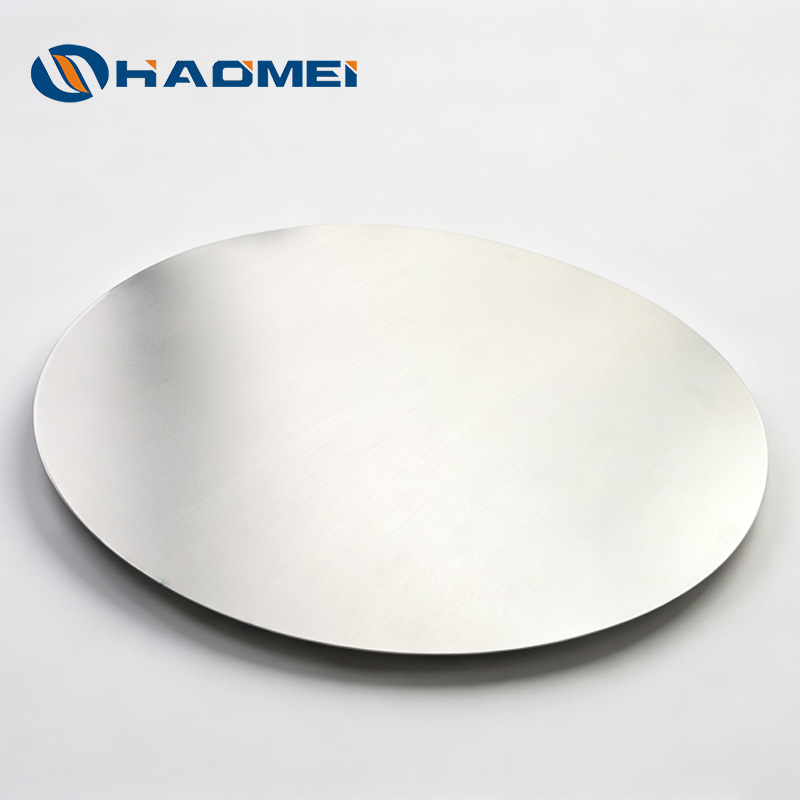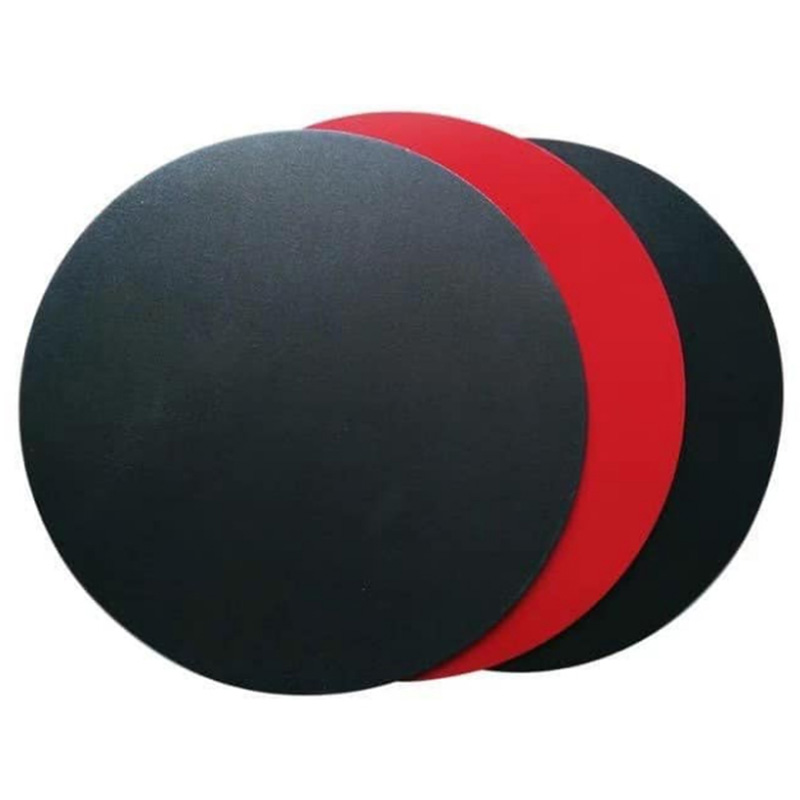


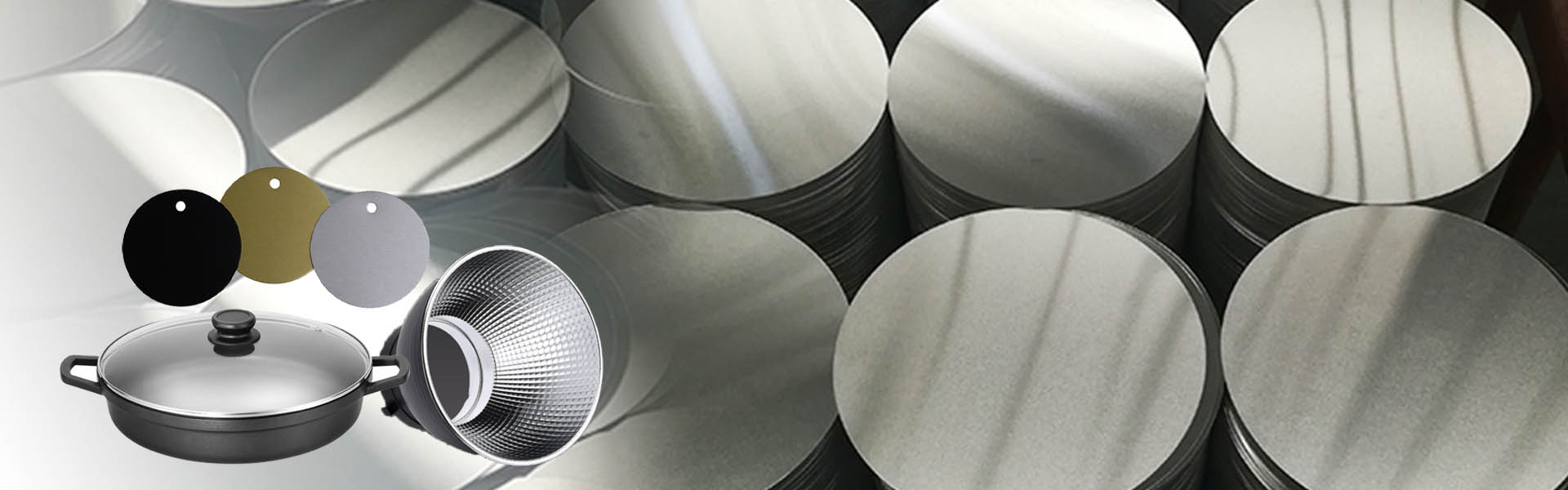
Selecting the right aluminum disc supplier is a critical decision for non-stick pan manufacturers. The quality of the disc directly affects forming performance, coating adhesion, thermal conductivity, finished-product appearance, and long-term cookware durability. A low-cost material may appear attractive at the purchasing stage, but inconsistent quality can create much higher costs through stamping failures, rejected coating batches, customer complaints, and production downtime.
When evaluating a supplier for aluminum disc for non-stick pans, manufacturers should look beyond unit price. The most reliable supplier is one that can provide stable material properties, clear quality documentation, clean surfaces, secure packaging, and effective controls over defects. The following six factors should form the basis of a supplier qualification program.
1. Alloy Consistency
Alloy selection is the foundation of cookware performance. Non-stick pans commonly use aluminum grades such as 1050, 1060, 1070, 1100, 3003, or other grades chosen according to the pan design, forming process, thickness requirement, and target market. Regardless of the selected alloy, consistency from coil to coil and batch to batch is essential.
A supplier should provide a clear chemical composition specification, supported by material test certificates. Small variations in silicon, iron, copper, manganese, magnesium, or other elements can influence elongation, hardness, conductivity, corrosion resistance, and forming behavior. If the alloy composition varies too much, the discs may react differently during deep drawing, spinning, stretching, or press forming.
For example, a batch with excessive hardness may crack at the rim during forming. A batch that is too soft may deform excessively, leading to poor pan geometry or reduced flatness at the base. Inconsistent metallurgical properties can also affect how evenly heat spreads across the finished pan.
Ask suppliers for information on alloy grade, temper, chemical composition range, mechanical properties, grain structure, and production standards. It is also valuable to request sample discs from multiple production lots rather than approving a supplier based on one ideal sample.
2. Dimensional Tolerance
Accurate dimensions are necessary for efficient and repeatable production. Diameter, thickness, flatness, roundness, edge condition, and weight should all remain within agreed tolerances. Even minor deviations can cause problems in automated feeding systems, press tools, spinning equipment, and coating lines.
Thickness control is particularly important. If discs are too thin, the pan may warp during forming or cooking. If they are too thick, material consumption increases and pressing loads may exceed design limits. Thickness variation across a single disc can also cause uneven heat distribution and an inconsistent appearance after forming.
Diameter accuracy affects tool alignment and material flow. A disc that is oversized may create wrinkles or excess trimming waste, while an undersized disc may not provide enough material for the required wall height. Poor roundness can also result in uneven stretching during deep drawing.
A capable supplier should state its standard tolerances and demonstrate its inspection process. Manufacturers should verify whether measurements are taken at multiple points across each disc and whether flatness is checked before shipment. It is advisable to establish incoming inspection criteria that match the requirements of the specific pan design rather than relying only on generic industry standards.
3. Surface Cleanliness
Surface quality has a direct impact on non-stick coating performance. Before coating, cookware manufacturers typically clean, pre-treat, sandblast, polish, or otherwise prepare the aluminum surface. However, excessive oil, oxidation, dust, rolling residues, scratches, stains, or embedded particles can reduce coating adhesion and create visible defects.
A clean and uniform surface allows the coating process to operate more consistently. Contaminated discs may lead to pinholes, blistering, peeling, discoloration, fish-eye defects, or uneven coating thickness. These problems may not always be visible immediately; some can emerge after curing, repeated heating, dishwashing, or use by the consumer.
Suppliers should be able to explain how they control lubricants, handling contamination, storage conditions, and surface inspection. If discs are supplied in an oiled condition, the oil type and application level should be controlled and compatible with the buyer’s cleaning process. If the discs are supplied dry, the supplier must protect them from oxidation and handling marks.
During qualification, inspect samples under proper lighting and conduct practical coating trials. Laboratory cleanliness data is useful, but real production testing remains the best way to determine whether the surface condition supports reliable non-stick coating adhesion.
4. Packaging and Transportation Protection
Packaging is often underestimated, yet it has a major influence on the condition of aluminum discs upon arrival. A high-quality disc can become unusable if it is scratched, dented, oxidized, or contaminated during transportation and warehouse storage.
The supplier should use packaging designed for the disc diameter, thickness, and shipment method. Common protective measures include interleaving paper, plastic film, moisture barriers, edge protection, reinforced pallets, shrink wrapping, and sturdy outer covers. For export shipments, packaging should also provide resistance to humidity, vibration, and long transit times.
Pay attention to how discs are stacked. Excessive stack height can create pressure marks or deformation on lower layers. Insufficient separation can cause rubbing and scratches. Pallets should be strong enough to prevent collapse, and the load should be secured to avoid movement inside containers.
A supplier should provide clear handling instructions, package labels, net and gross weight information, batch identification, and storage recommendations. Good packaging reduces incoming rejection rates and helps ensure that a durable aluminum disc for cookware remains in suitable condition until it enters the production line.
5. Traceability
Traceability is essential for quality management, especially when supplying cookware for branded products, export markets, or regulated customer programs. Every shipment should be traceable back to the original production batch, alloy melt or coil, processing date, inspection records, and packing list.
At a minimum, each package should carry a unique lot number. That lot number should connect to documents showing the alloy composition, temper, dimensions, mechanical properties, inspection results, and shipment date. Strong traceability allows manufacturers to isolate a problem quickly if a defect is discovered during forming, coating, or final inspection.
Without traceability, a manufacturer may need to quarantine large amounts of inventory after a quality issue, causing unnecessary financial loss and delivery delays. With accurate records, the affected batch can be identified and contained efficiently.
When assessing suppliers, ask how they maintain lot separation in production and warehousing. A reliable supplier should have a documented system that prevents mixed batches and enables rapid retrieval of quality records.
6. Defect Control and Continuous Improvement
The final evaluation factor is the supplier’s ability to prevent, detect, and correct defects. Common disc defects include scratches, dents, edge burrs, cracks, laminations, oil stains, oxidation, thickness variation, poor flatness, and non-metallic inclusions. Each of these can reduce production yield or affect finished-pan quality.
A good supplier should use preventive controls rather than relying only on final inspection. This may include incoming coil inspection, process monitoring, die maintenance, automated thickness measurement, visual inspection, sampling plans, and documented corrective-action procedures.
Ask potential suppliers about their defect rate, rejection handling process, response time, and root-cause analysis method. If a problem occurs, the supplier should be able to provide containment actions, replacement material when appropriate, and a clear corrective and preventive action report.
Ultimately, the best supplier is not simply the one offering the lowest price. It is the partner that delivers stable alloy quality, precise dimensions, clean surfaces, protected packaging, complete traceability, and disciplined defect control. Choosing such a supplier helps non-stick pan manufacturers improve production efficiency, protect coating quality, reduce waste, and build a stronger reputation in the cookware market.
Original source: https://www.aluminum-circle.com/a/how-to-choose-an-aluminum-disc-supplier-for-non-stick-pan-production.html
Prev: Aluminum Round Blanks